









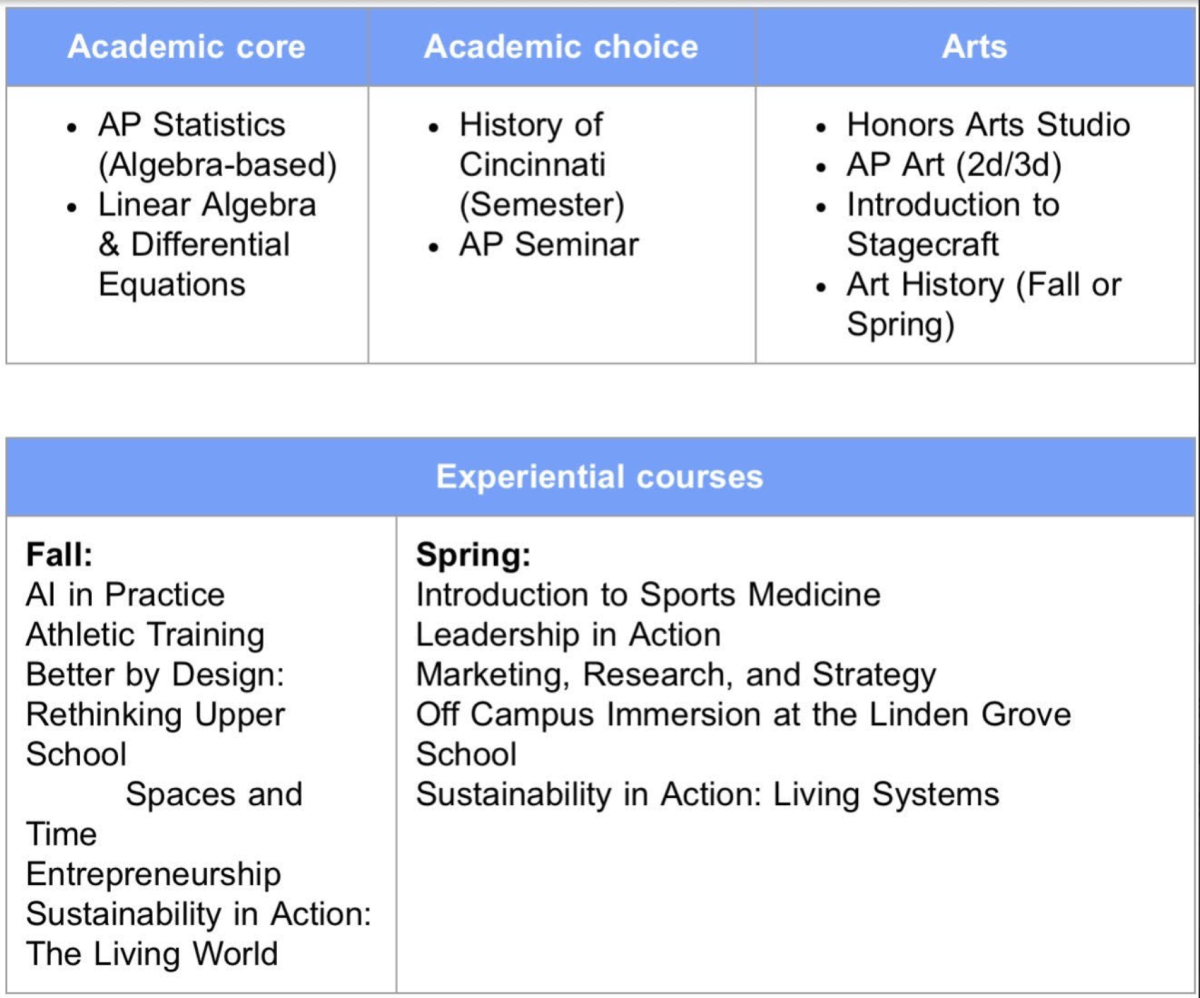
Recently at Seven Hills, there have been several changes made to the elective requirements for students. Some students are confused by these changes, while others have expressed frustration at the changes. According to the school, these changes are being made to help prepare the students for their future and allow for more creativity.
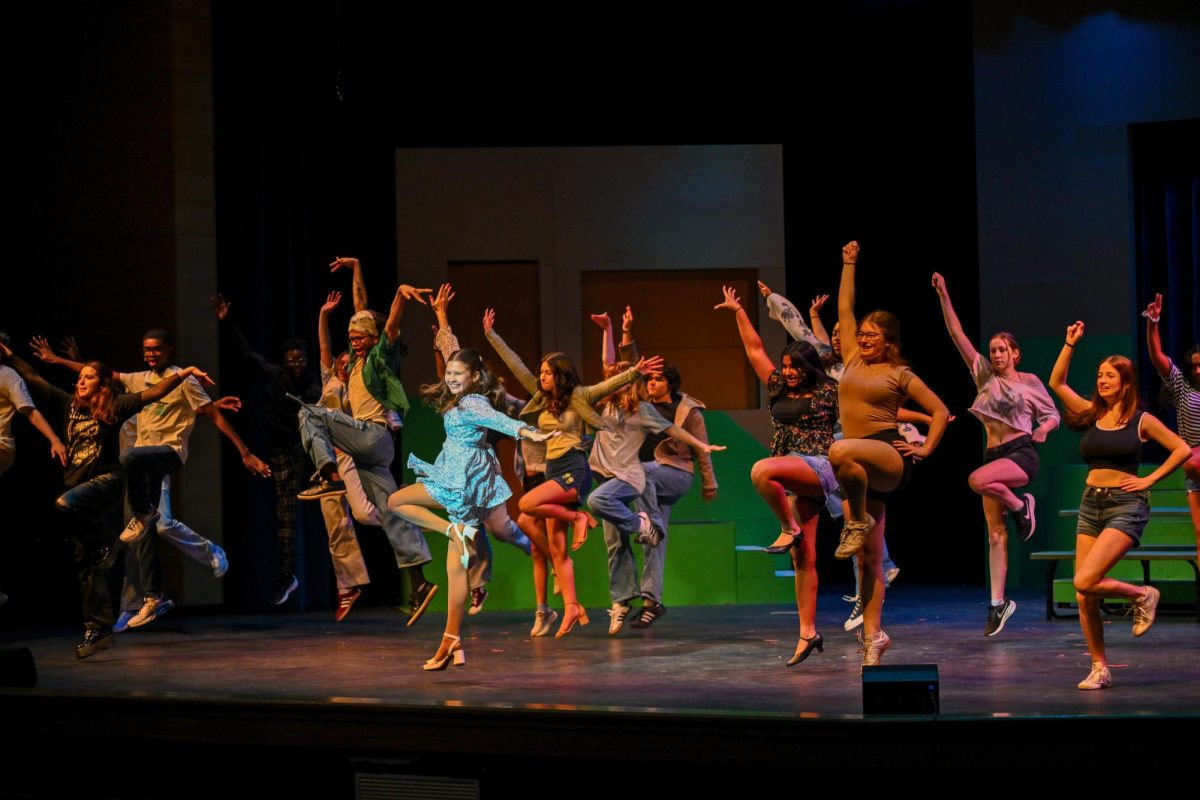
One of the major changes is with the number of required art credits. The school is planning to increase art requirements from three semesters to five semesters for future students, starting with the class of 2030 and beyond. Some students do not understand the reason behind this change, especially those who have already identified their career path. For example, if someone wants to be a doctor or engineer, they feel that taking ceramics or painting classes will not help them with their chosen career.
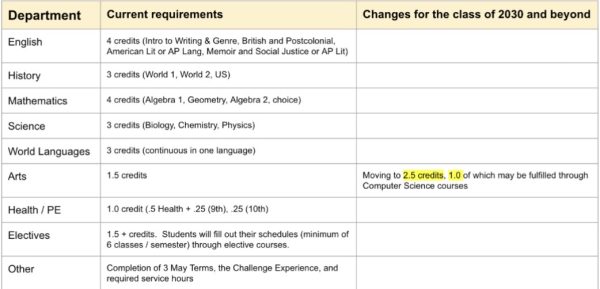
However, the school states that its goal is not just to prepare its students for one job, but to allow them to try new things that may enrich their lives. The Head of the Upper School, Rick Tate, stated, “The whole concept of education in the United States is [that] high school is supposed to expose you to a wide variety of opportunities.” Also, this change in requirements brings Seven Hills more in line with other independent schools. They believe that the skills students learn in creative classes may help them to “think outside the box” and get better at solving problems. They also state that colleges like students who are more well-rounded and not only focused on one subject.
Another big change is adding more computer science and coding classes. Students will have the option to take coding, and this will be allowed as a substitute for up to two semesters of the art requirement. In current times, technology plays a big role in our lives, and most future jobs will involve computers in some way. By providing this option, the school feels it is helping its students gain the skills they need to keep up with technology in everyday careers.
Some of these changes have caused students to become frustrated. Some students have expressed that they feel forced to take classes that they don’t care about. Other students feel that their classes should be geared towards their future careers. The school’s response is that sometimes students may not know what they like, and by being exposed to different classes, they may discover that they have an interest in something new.
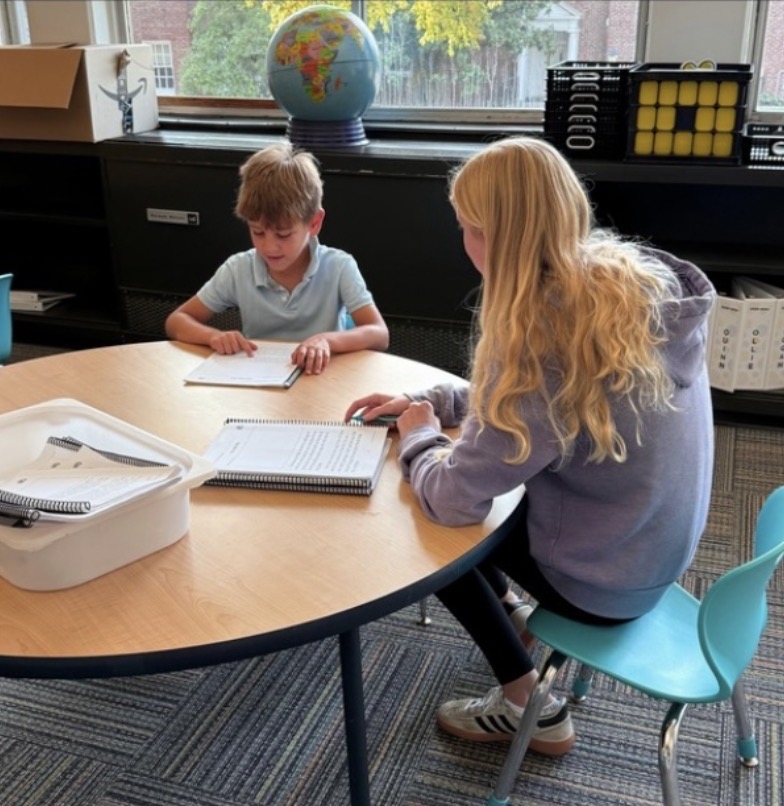
There are other classes being added that are more hands-on, such as sports, medicine, and business classes. These classes are supposed to help students learn in a more active way rather than just sitting in a classroom. One of the classes that is taking place this year is called 1000 and Change, taught by Karen Glum. Tate said, “It’s where the focus is learning by doing and not just memorizing and telling us what we told you. So these are hands-on.” They are designed to teach students real-life skills that they may find helpful later in their lives.
Change is sometimes hard, but the school believes that this new system will help its students in the long run. They believe it is important for students to learn how to be creative and how to think for themselves. The goal is not only getting good grades and getting into college, but also to be a well-rounded person who is prepared for their future. It may take some time for the students to adjust to these changes, but the school hopes they will eventually see it as a positive change.
A correction was made on Feb. 12, 2026: An earlier version of this story inaccurately stated information about Computer Science classes. The classes will be an optional way to fulfill the arts credits, not a requirement.