


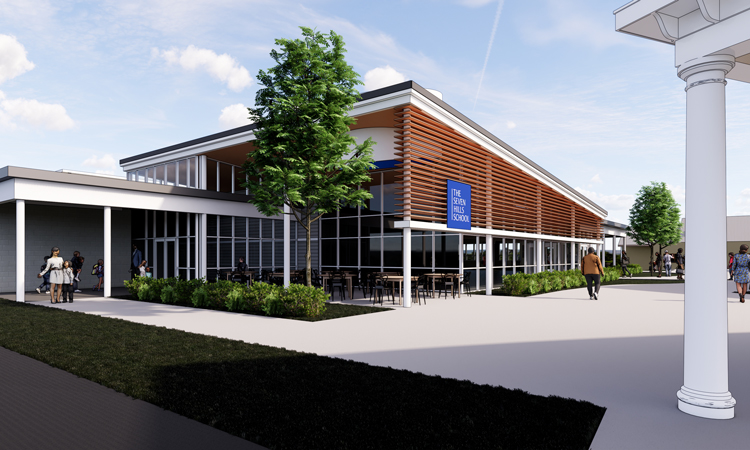

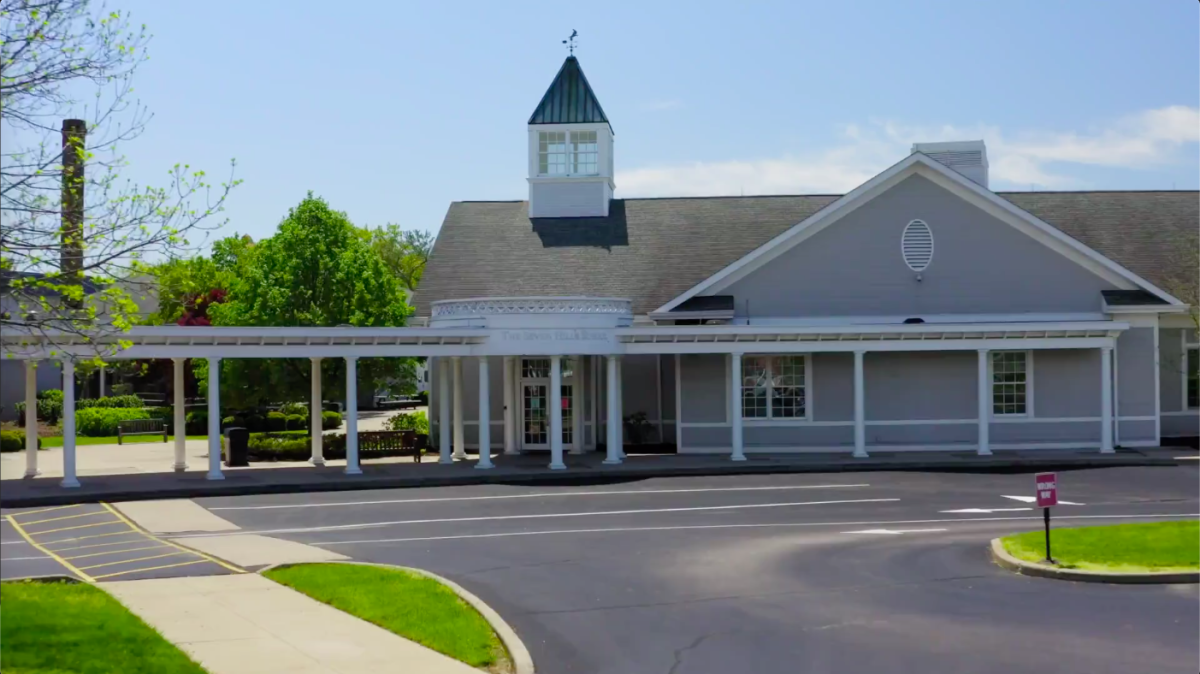




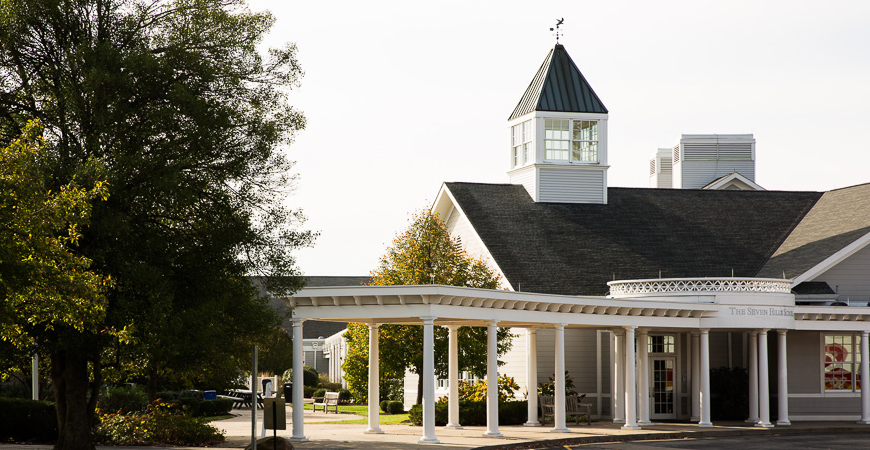




With the controversial combination of Doherty and Lotspiech, Seven Hills needs more space on the campus for lower schoolers. While they could expand the existing Lotspiech building, it’s reaching the end of its useful life, according to head of school Dr. Bolton. He said, “Because of the way [Lotspiech] was constructed, 40 years is starting to feel like the end of its useful life. So rather than trying to build onto that building, which is wood-framed and has a limited life, we’ll start anew and build from the ground up.” So, the school made a big decision: constructing an entirely new Lotspiech-Doherty Lower School. The location: just behind the field house, in a quaint area connected with nature.
When I first saw the renderings of the new building, I was a bit mad. The new lower school is, frankly, unsightly, especially from the outside. It’s not that it’s an ugly design. It’s more that the building is totally inoffensive; the new building declares no personality or character. While this could be said for every Seven Hills building, a new building means a new opportunity to give Seven Hills some much-needed personality, but the opportunity wasn’t taken.

Looking at the design of the building, it’s much more square than other buildings on campus, missing a traditional gabled roof, grey siding, and white molding, meaning it looks far less Seven Hills than other buildings. But I’m not at all against modern architecture, adaptation, and modernization. Since I was a child, I’ve been interested in modern architecture and innovative designs. Architects like Zaha Hadid, Frank Lloyd Wright, and Ludwig Mies van der Rohe inspired my Magna-Tiles creations and on-paper ideations. So modern architecture isn’t off the table at all for new buildings anywhere.

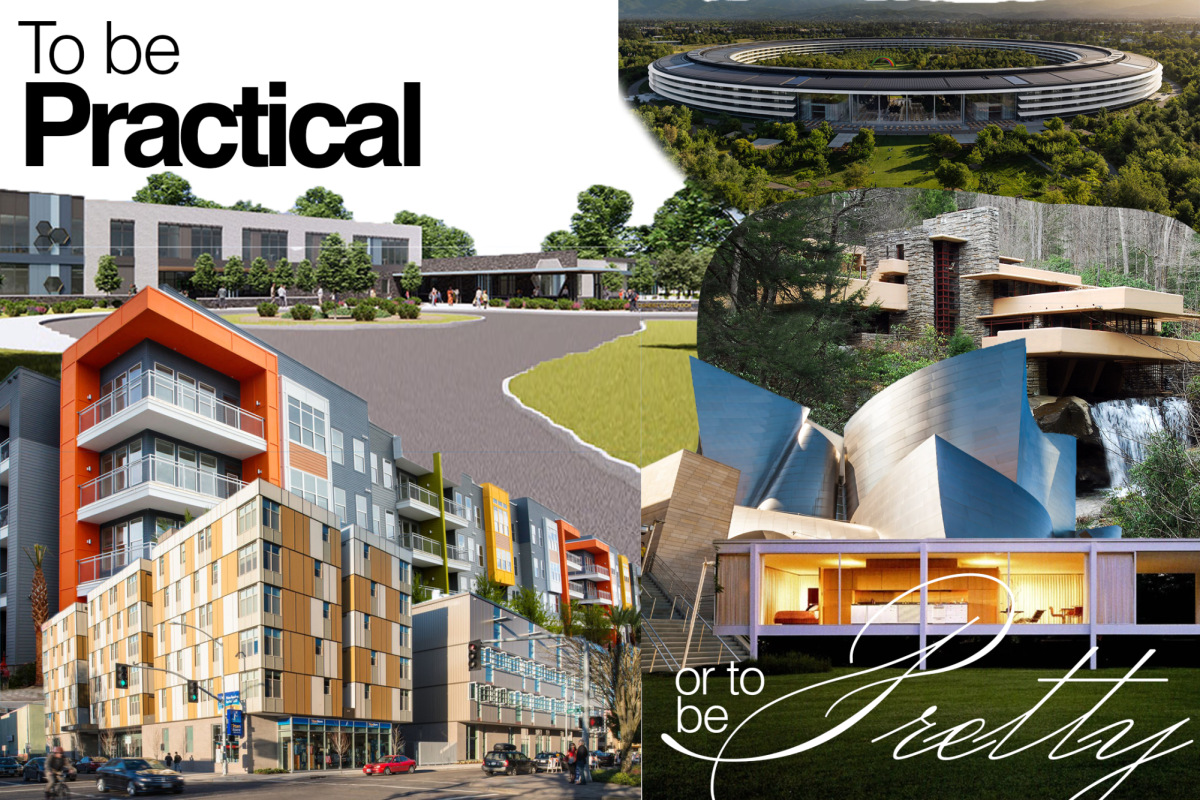
But this new building isn’t the modern architecture I know and love. Most modern architecture lies behind a barrier, because beautiful modern architecture is incredibly expensive. The whole point of modernism is to break out of the mold and create things that are different, like, for example, the windows designed to uniquely react to natural light in Frank Lloyd Wright’s Pope-Leighey House, pictured below.
But innovation is expensive, so this “new-wave modern” architecture bypasses this inconvenient foible by looking at the core shapes of modernism, trying to imitate the inaccessible style. While this imitation may look nice, it is not unique at all. Problems arise when so much of this style is built in close proximity, because it gets repetitive and ugly. Drive along Madison Road, and you’ll see enough examples of this style to totally understand my annoyance with it.
This is what made me mad– I felt like by building something in this style, Seven Hills was sitting idle and letting boring architecture take over our learning spaces, just as it has taken over other spaces, while labeling it as modern, forward-thinking design. But, upon interviewing Dr. Bolton and researching further, I found out that Seven Hills made all the right decisions. While the decisions didn’t result in a beautiful building, they kept the real priorities of the school and strayed from frivolity.
I remember seeing in the early days of unification renderings of an incredibly curvy, modern new lower school. It was incredibly cool, and it would have been a landmark building for Seven Hills. But the school did not go with this curvy design. Instead, they settled on a much less organic, stiffer design. When I brought this big change up with Dr. Bolton, he said, “That [choice] was an early, but also easy decision because the architects showed curved designs in the renderings, and it became a question of, how responsible is it to use the school’s money to pay for curved glass and curved walls, which come at a huge premium compared to straight lines.”
And I feel that not going with that design was the right decision. I found that the more modern and curvy buildings on campus, and in general, are just worse from a logistical standpoint. The DAC is a very interesting building, and I appreciate its creative quarter-circle design. But, from a logistical perspective, it’s terribly designed. For being such a huge building, it has very few classrooms and not much useful space, likely due to its weird shape. And, in the case of some of the most beautiful buildings in the world, they have tons of problems. Fallingwater in Pennsylvania is a Frank Lloyd Wright masterpiece. Floating above a waterfall, the vacation home singlehandedly saved Wright’s reputation, and today it is considered to be one of the most beautiful buildings in the world. But it’s been riddled with structural issues its entire
life. The last thing Seven Hills would want is its new lower school, designed to be functional, to be riddled with structural problems due to an adventurous design. While the new lower school will be quite bland, it will only be bland because it’s tried and true, seen time and time again in all sectors of construction, and bound to last for a while.

And that’s what Dr. Bolton thinks, too, admittedly in a much more diplomatic tone. He said, “It was really important to me that we build out of materials that will last for many decades. We’re replacing a 40-year-old building, but I don’t want to replace this one in 40 years. I want somebody else to replace it in 100 years.” And that quote underscores another huge goal concerning the design of this new lower school: sustainability. For the first time in Seven Hills history, the new Lower School will be LEED certified. LEED is a prestigious certification system that measures the sustainability of any building, considering factors from building materials and energy usage to public transit access and air quality. This is a huge step forward for sustainability, and I’m happy to see the school making a large-scale effort towards it.
Overall, this new school design is not my favorite. But the school has made the right decision for the majority of its clientele: people who want their children to have the best education possible. And as I said before, building stunning buildings is not part of that goal. So while the designers haven’t quite pleased me, I feel that an apparent mismanagement of money spent on building curvy walls would have received much more backlash from the Seven Hills community.