













Recently, the U.S. and Venezuela have developed tensions because of the U.S. military operation that resulted in the capture of Venezuela’s president, Nicolás Maduro, and his transfer to the U.S. to face criminal charges. The U.S. government framed the operation as combating “Narco-Terrorism,” but many other countries see the operation as a violation of Venezuela. The U.S. has also placed sanctions on Venezuela’s oil industry, which limits who can buy the oil, making it seem like Venezuela’s oil industry played a role in U.S. motives for the military operation.
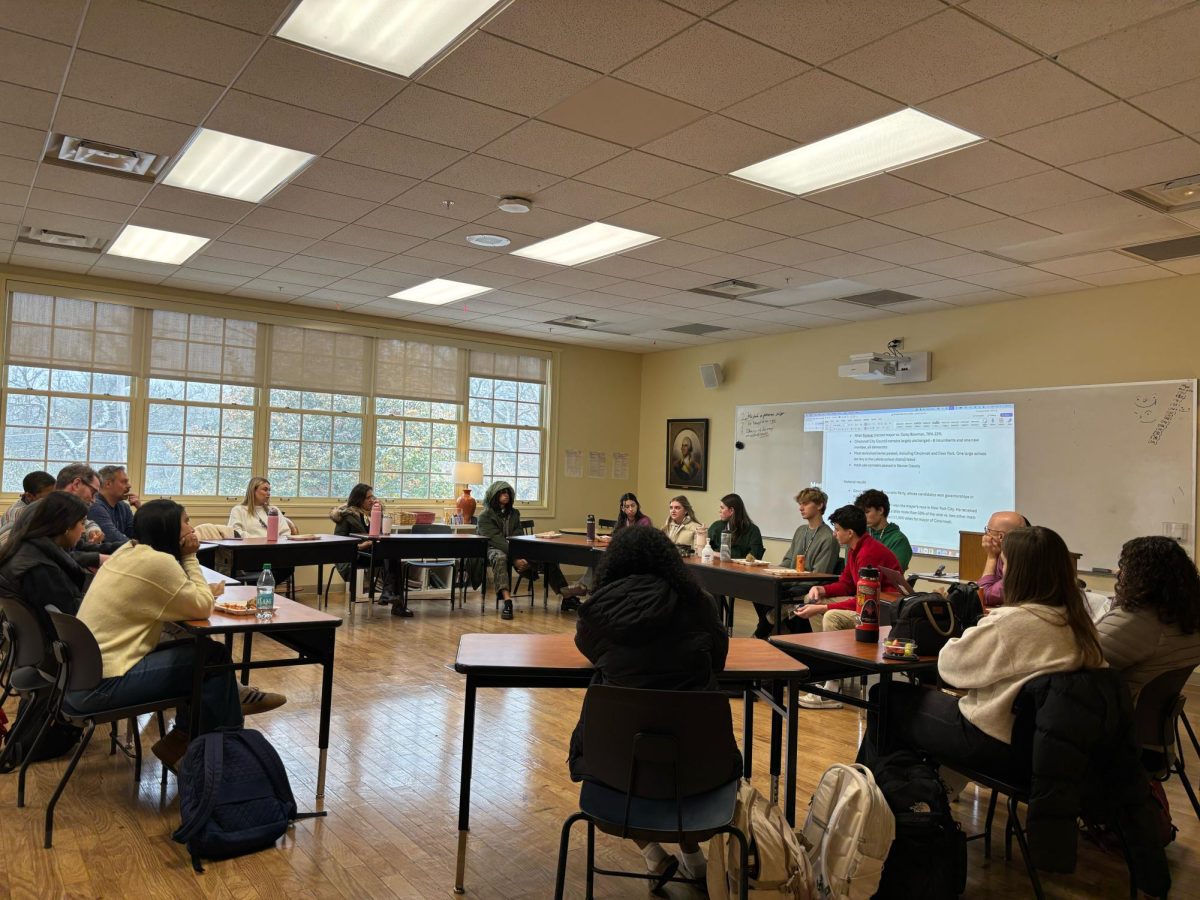
This episode highlights the complexity of current news. For educators, using this instance to inform students about current affairs can serve as a real-world connection to global issues, and a way to practice analysis skills learned in class. Discussing current news also creates a challenge for teachers, as students may not all have the same information, or may easily be overwhelmed.
Although it can be hard, it is very important for students not to block out current news and remain informed about world events. Marty Skidmore, a history teacher at Seven Hills, said, “Students have to know how the real world shapes their lives, as well as those lives around them. Even in current events that seem like they are taking place in a faraway place, they still have a direct impact on our daily lives.” As history teachers, Marty Skidmore and. Eric O’Connor teach students to develop skills to analyze the past as well as the present. They help students apply those analyzation skills to current events. Mr. O’Connor said, “We don’t just teach the past. We also teach analysis of the present, because the skills that we use to analyze the past are the same skills that can be used to analyze the present.”
As important as it is, discussing current events with students is difficult for teachers. Teachers have to not let their opinions affect how they convey the events to students. Remaining unbiased is a struggle for everyone, but teachers have to be especially careful so that the students can develop their own opinions based on the conveyed information. Skidmore shared, “When it comes to bias, try to really reflect and be aware of what one’s biases are. So, for example, how my being from a certain race or religion might affect how I see the world.” Being self-aware of one’s biases is important for teachers when discussing events, but it can also be important for students when formulating opinions about the world.
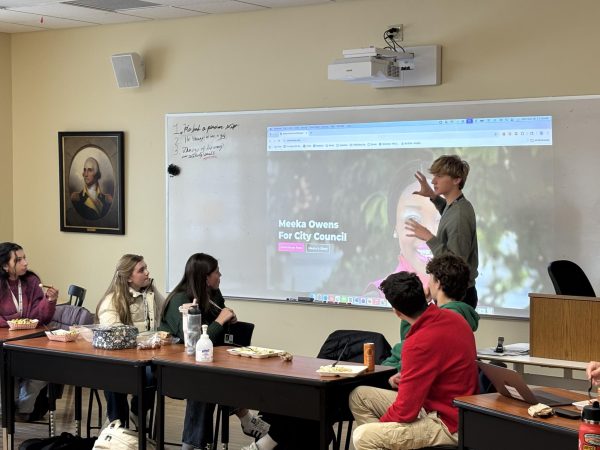
Also, students get their information from many different sources, so it can be difficult to have everyone on the same page. Besides several different sources being involved, O’Connor also shared that “a lot of students feel overwhelmed and anxious when they read the news because the news sometimes feels like an avalanche of bad news, and the news sometimes feels like something we can’t control.” Social media also plays a big role in stressing students out about current events because outlets like TikTok do not usually have reliable and organized information. That’s why it is important to gather information about current events from a variety of unbiased, reliable sources.
Finding sources to learn about the news can be overwhelming and hard. When looking for sources, it’s good to find references that are well known, are established news organizations, and the articles are written in a neutral way, where the events are analyzed from multiple sides. O’Connor said, “I think those sources do include places like the New York Times, Wall Street Journal, and places like The Atlantic and NPR.. Sources like those aim to analyze events from many perspectives and write critically about the news rather than writing with opinion.
Overall, the recent tensions between the United States and Venezuela show how complicated and fast-changing current events can be. While situations like these can be confusing or overwhelming, they also provide valuable opportunities for students to connect what they learn in class to what is happening in the real world. Teachers play an important role in helping students navigate these topics by encouraging critical thinking, remaining aware of bias, and guiding students toward reliable sources of information. Even though discussing current events can be challenging, it is essential for students to stay informed and engaged because understanding global issues helps them better understand their own lives and the world around them.
